

How Condition Based Monitoring Supports Better Equipment Maintenance
Moving Beyond Fixed Maintenance Intervals
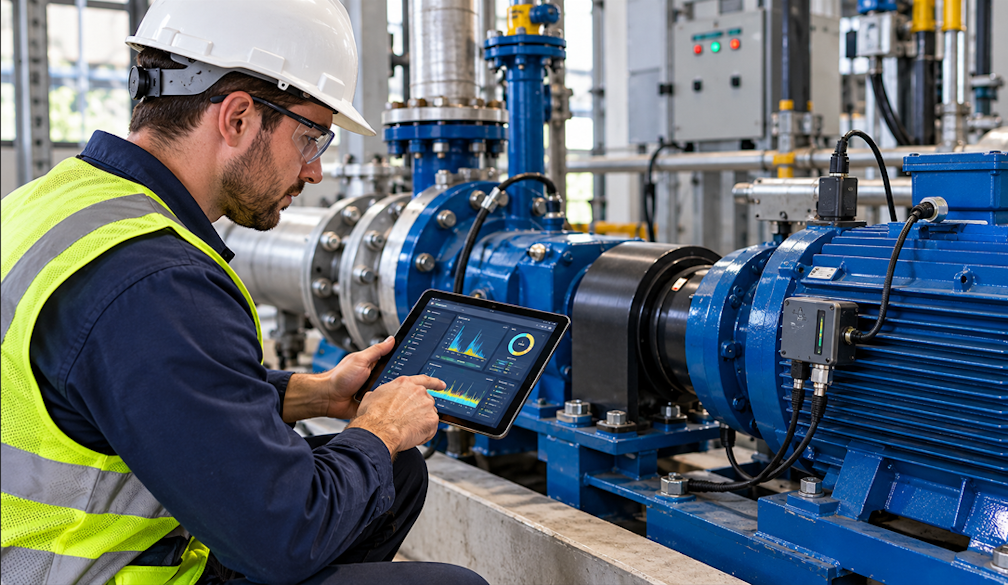
Condition based monitoring gives maintenance teams a way to assess equipment according to its actual operating condition rather than relying only on predetermined service intervals. Instead of assuming that every asset requires attention at the same time, relevant measurements can be collected and reviewed for meaningful changes. HYDAC describes its condition monitoring systems as tools for collecting production and machine data, providing information about machine status and helping operators identify errors or faulty parts. This makes monitoring part of a wider maintenance decision process.
The quality of a monitoring programme depends on choosing measurements that relate to the equipment’s real behaviour. Pressure, temperature, fluid condition, contamination, vibration and other variables can provide useful information when they are interpreted in context. A condition based monitoring strategy should therefore begin with the asset, its failure modes and the decisions maintenance personnel need to make. The objective is not to collect every possible signal, but to collect information that can lead to a useful action.
Turning Measurements into Useful Information
HYDAC’s condition monitoring systems can provide live and historical measurement views, configurable dashboards and system hierarchies. These features matter because a raw sensor reading is rarely enough on its own. Maintenance teams need to understand whether a value is normal, whether it is changing over time and whether the change deserves investigation. Historical information can provide a baseline, while current readings can show whether equipment is moving away from expected behaviour.
For organisations evaluating condition monitoring condition monitoring solutions, the maintenance workflow should be considered as carefully as the technology. Someone needs to review the information, interpret significant changes and determine what happens next. An alert may lead to an inspection, a follow-up measurement or a planned intervention. When that process is clearly defined, monitoring becomes part of routine maintenance rather than another disconnected source of data.
Where Condition Monitoring Can Add Value
Fluid condition is one practical area for monitoring because changes in oil quality and contamination can affect hydraulic and lubrication systems. HYDAC offers sensors for online monitoring of oil condition and states that users can be informed in real time about changes in fluids. This can give maintenance teams earlier visibility of changing operating conditions. The precise measurements required will depend on the equipment, but the principle is consistent: monitor variables that provide meaningful evidence about asset condition.
Condition based monitoring can also help organisations prioritise their maintenance resources. Critical assets may justify more continuous monitoring, while less critical equipment may be checked periodically. The right level depends on operational consequences, equipment characteristics and the information available. By matching monitoring intensity to asset importance, businesses can avoid both under-monitoring critical machinery and collecting unnecessary data from low-risk equipment.
Building a Practical Monitoring Programme
A strong programme connects sensors, data, people and maintenance procedures. The technology should be configured around a clear objective, and the information should be presented in a form that engineers and technicians can actually use. HYDAC highlights configurable dashboards, historical measurements and system management as features of its condition monitoring systems. These capabilities can support a structured approach where machine information is organised around the needs of the maintenance and process teams.
The long-term value comes from consistency. When condition based monitoringis applied with clear baselines and response procedures, teams can compare equipment behaviour more confidently and decide when further investigation is justified.HYDAC Australia & New Zealandcombines fluid-power knowledge with condition-monitoring technology, making this approach relevant to organisations that want equipment data to play a more practical role in maintenance planning and reliability management.
HYDAC Australia & New Zealandcan help organisations assess these requirements in the context of their equipment, application and control strategy.
The strongest monitoring programmes also create a feedback loop between data and maintenance. When condition based monitoring identifies a meaningful change, the team can investigate the relevant asset and record the outcome. Over time, those records can improve understanding of normal behaviour and help refine alert thresholds. Well-designed condition monitoring condition monitoring solutions support this process by making measurements and historical information easier to review. The objective is not to increase the number of alerts, but to make each important alert more useful to the people responsible for equipment reliability and maintenance planning.
For example, condition monitoring condition monitoring solutions can combine live measurements with historical records so that a change is easier to place in context. A second review of condition monitoring condition monitoring solutions can help confirm whether a change is persistent or temporary. Used consistently, condition based monitoring gives maintenance teams a structured way to connect measurements with inspections, planned work and equipment history.
This also makes condition monitoring condition monitoring solutions easier to evaluate against the maintenance objectives established at the start of the programme.

 Hashtag.net.au


