

If you're ageing and on medication, it might be time to re-assess your alcohol intake
- Written by Stephen Bright, Senior Lecturer of Addiction, Edith Cowan University
Drinking patterns tend to change as we age. The older we get, the more likely we are to drink on a daily basis. But older adults often perceive that drinking is only a problem if a person appears drunk.
Australia’s draft alcohol guidelines recommend healthy adults drink no more than ten standard drinks per week and no more than four in a day. This is down from 14 standard drinks per week in the previous guidelines and no more than two standard drinks in any one day.
Anything above this is considered risky drinking because it increases the risk of alcohol-related diseases, such as cancer, and injuries.
Between 2007 and 2016, there was a 17% increase in risky drinking among Australians aged 60-69. In 2016, 18.2% of 60-69 year olds drank at risky levels.
Among women, those aged 50-59 years are now more likely to drink at risky levels (13%) than any other age group, including women aged 18 to 24 years (12.8%).
Read more: Older Australians' drinking on the rise and they don't know the risks
Older adults are more vulnerable to alcohol’s interactions with medicines, medical conditions that can be made worse by alcohol, and age-related changes in the metabolism of alcohol that mean we become more intoxicated from drinking the same amount of alcohol. Alcohol can also increase the risk of falls.
For some older people, this means that maintaining their current levels of alcohol consumption as they age inadvertently places them at risk.
Alcohol and many medications don’t mix
Older adults are more likely to be taking a number of medications; about two-thirds take four or more.
Many of these medications can interact with alcohol.
Our research among risky drinkers aged 58 to 87 found 92% were taking medications that when combined with large amounts of alcohol could lead to serious adverse effects. This included common medications prescribed for high blood pressure.
For 97% of the people we studied, drinking alcohol reduced the effectiveness of the medication. This included Nexium, a medication commonly prescribed to treat gastric reflux.
Why are older Australians drinking more?
While age-related factors such as bereavement and retirement can increase the likelihood of drinking at risky levels, most often alcohol is part of an enjoyable social life as people age.
In our research, alcohol use was closely linked to social engagement: more frequent opportunities to socialise were associated with more frequent drinking.
Among retirement village residents, having access to a social group “on tap” also encouraged more frequent drinking.
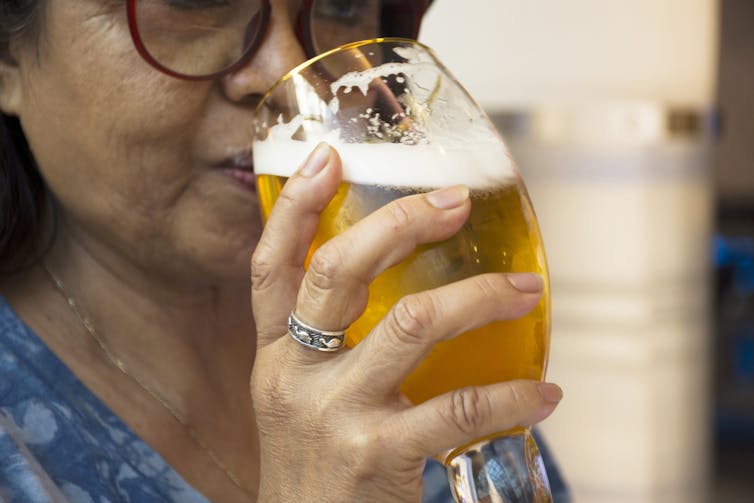 For many older drinkers, alcohol is part of their social life.
Shutterstock
For many older drinkers, alcohol is part of their social life.
Shutterstock
In a recent study of Australian and Danish women drinkers aged 50 to 70, those who were drinking at risky levels said overwhelmingly their drinking was a normal, acceptable and enjoyable part of their lives, so long as they appeared to be in control.
In doing so, they were able to mentally distance their drinking from current and future health problems.
Recognising heavy drinking as a health issue
Australia’s draft alcohol guidelines don’t provide any specific recommendations for older adults, beyond those recommended for adults in general.
Rather, they recommend older adults speak with their GP to determine an appropriate level of drinking based on their medical history and medications they are taking.
Read more: Cap your alcohol at 10 drinks a week: new draft guidelines
But our research found only 30% of older men and 20% of older women could recall their GP asking about their alcohol use over the past 12 months, regardless of what medication they were taking.
Even fewer could recall their community pharmacist asking about their alcohol use.
 Pharmacists should be asking about alcohol use when dispensing medicine.
Shutterstock
Pharmacists should be asking about alcohol use when dispensing medicine.
Shutterstock
Promisingly, almost all participants were open to their GP asking about their alcohol use, particularly in relation to medication.
And more than half believed it was OK for their community pharmacist to raise this issue with them when being dispensed medication.
So what can we do about it?
Recognising the social context to older adults’ drinking and other drug use, and understanding how they make sense of these behaviours, is an important first step in preventing and minimising harm.
Read more: Hazardous drinking: research finds that 40% of people over 50 drink too much
At a population level, public health messages must resonate with older people by reflecting the context in which they drink.
At a community level, GPs and community pharmacists are well placed to help older adults minimise the risk of harm, but may require further training to develop their skills and confidence in broaching this topic with patients.
For older adults experiencing alcohol-related issues, Australia’s first older adult-specific service, called Older Wiser Lifestyles (OWL), has effectively identified and engaged with more than 140 people who didn’t realise their drinking could be placing their health at risk.
This Victorian initiative asks patients at GP clinics to complete a screening test on a iPad and notifies the GP if risks are identified. The person can then participate in an OWL early intervention program of education, brief counselling and harm-reduction advice.
So far the program has led to participants reducing their alcohol consumption and having fewer problems with medicines that interact with alcohol.
Such a scheme could be replicated across the country, and has the potential to improve lives, reduce preventable disease and premature deaths, and save the health system money.
Authors: Stephen Bright, Senior Lecturer of Addiction, Edith Cowan University


 Hashtag.net.au
