

climate activists follow the long history of museums as a site of protest
- Written by Kylie Message, Professor of Public Humanities, Australian National University
Andy Warhol’s Campbell’s Soup Cans at the National Gallery of Australia are just the latest artistic target of climate protesters, who have been throwing soup, mashed potatoes and cake at art worth millions of dollars.
The actions have received a muted response from some museum directors, but the protesters know exactly what they are doing.
As the activists who threw soup on Van Gogh’s Sunflowers said:
We know that civil resistance works. History has shown us that.
Indeed, there is a long history of museums and art being used for political protest.
For women’s suffrage and women artists
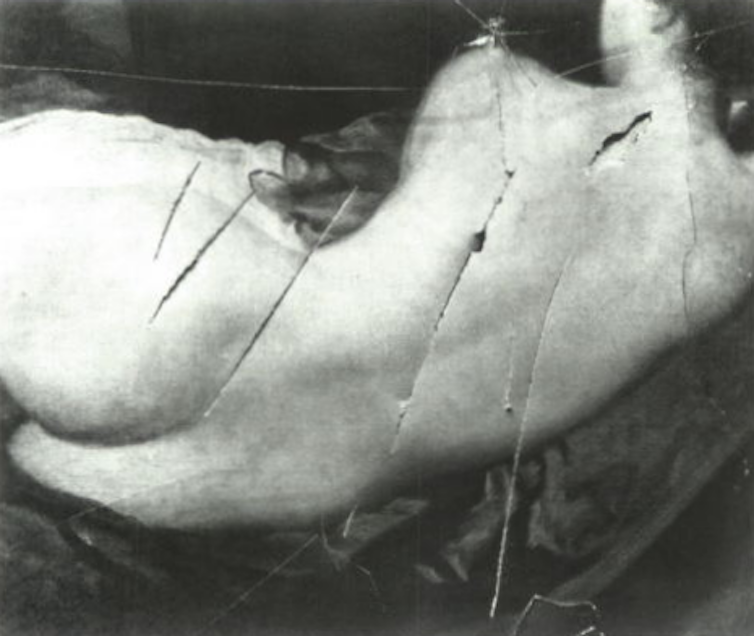
In 1914, suffragette Mary Richardson slashed the canvas of Velázquez’s Rokeby Venus at London’s National Gallery.
Richardson wanted to attract publicity to Emmeline Pankhurst’s imprisonment for her suffragette actions. Richardson selected this painting in part because of its value, and because of “the way men visitors gaped at it all day long”.
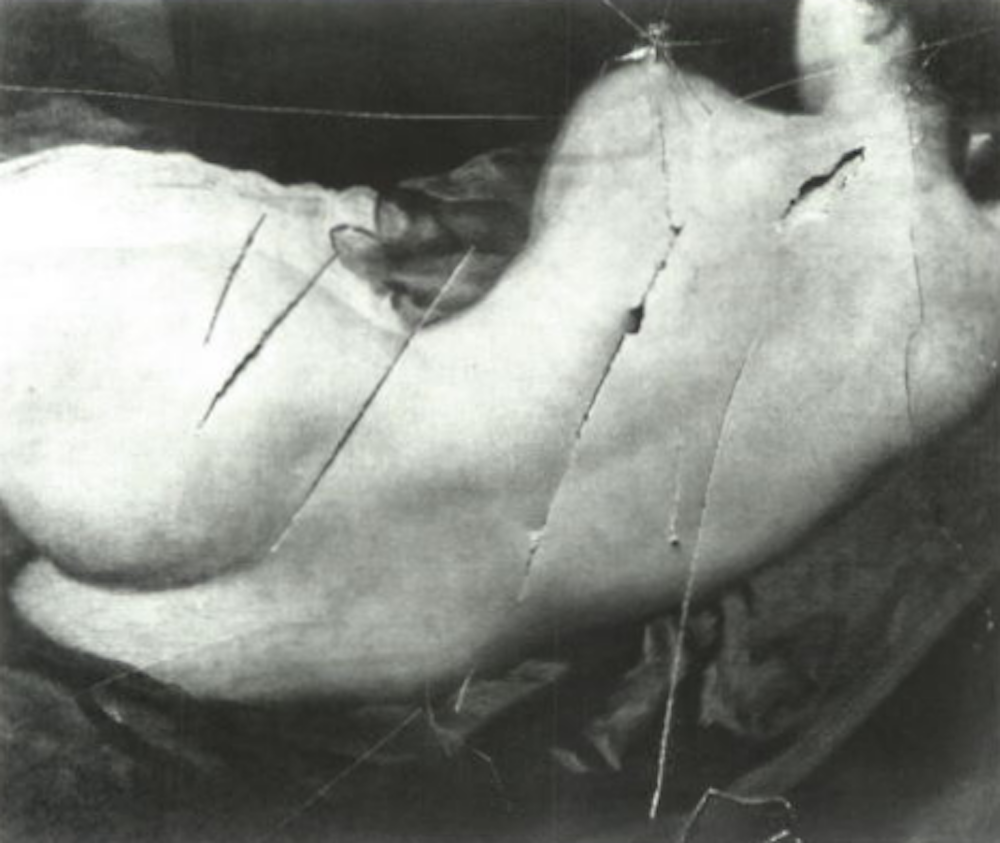
Her tactics are credited as motivating Extinction Rebellion and Just Stop Oil.
Since 1985, the Guerrilla Girls have been exposing sexual and racial discrimination in the art world.
Their actions have usually occurred at the outskirts of museums: in museum foyers, on nearby billboards and on New York City buses. Perhaps their most famous work asked: “do women have to be naked to get into the Met Museum?”
Against corporate sponsorship and artwashing
Decolonize this Place brings together campaigns against racial and economic inequality.
They organised a campaign beginning in 2018 targeting the then vice-chair of New York’s Whitney Museum, Warren B. Kander, whose company sold tear gas that had reportedly been used against asylum seekers along the US-Mexico border.
The campaign’s first event was held in the museum’s foyer. Protesters burned sage to mimic tear gas, which wafted through the lobby until the fire department arrived.
The protesters argued Kander’s business interests meant he was not fit to lead a globally significant cultural heritage institution that sought relevance for a wide and diverse public constituency. Kander resigned from the museum’s board in 2019.
Since 2018, artist Nan Goldin and her “Opioid Activist Group” have been staging “die-ins” at the museum to protest against the galleries named for sponsorship from the Sackler family.
The Sackler family business is Purdue Pharma, infamous for OxyContin, a major drug in the US opioid crisis.
Activists have targeted galleries around the world, and so far the Sackler name has been removed from galleries including the Louvre, the British Museum, the Guggenheim and, as of last month, the Victoria and Albert Museum.
Read more: 'Artwashing' gentrification is a problem – but vilifying the artists involved is not the answer
For the return of cultural artefacts
The highest-profile actions against the British Museum have targeted its rejection of calls to return objects including the Parthenon Marbles of Greece, the Benin Bronzes from modern-day Nigeria, and the Gweagal shield from Australia.
In 2018, a group of activists performed a “Stolen Goods Tour” of the museum. Participants from across the world gave a different story to what visitors read in the museum’s object labels and catalogues, as the activist tour guides explained their continuing connections with objects in the collection.
The tour did not convince the museum to return cultural items, but drew extensive global attention to ongoing campaigns seeking restitution and repatriation.
In the culture wars
Protests using art and museums aren’t just the domain of the left.
In 1969, an arsonist destroyed a display at the National Museum of American History that commemorated Martin Luther King Jr, who had been recently assassinated. The perpetrator was never identified.
In 2017, nooses were left at various museums of the Smithsonian, including The National Museum of African American History and Culture. No groups ever came forward to claim responsibility or express a motive, but the noose is a potent and divisive symbol of segregation and racially motivated violence.
In December 2021, doors to the Museum of Australian Democracy in Canberra were set alight twice by protesters with a number of grievances, including opposition to COVID-19 vaccines.
 The fire-damaged entrance to the Australian Museum of Democracy at Old Parliament House in December 2021.
AAP Image/Lukas Coch
The fire-damaged entrance to the Australian Museum of Democracy at Old Parliament House in December 2021.
AAP Image/Lukas Coch
The museum’s director said the “assault on the building” would force the museum to rethink its commitment to being “as open as possible, representing all that is good about Australian democracy”, and at the same time keeping it protected.
‘Direct action works’
The past two decades have seen a surge of art-focused demonstrations.
In 2019, Decolonize this Place and Goldin’s anti-Sackler coalition met with members of 30 other groups in front of Andy Warhol’s “The Last Supper” (1986) at the Whitney.
They were there to celebrate the Tate Museum in London and the Guggenheim Museum in New York, who had announced they would stop taking funding from the Sackler family. One participant cried “direct action works!”
Even when protests at museums and art achieve less concrete outcomes than this, they remain central tools for building public awareness around political and social issues.
It is unlikely actions against museums and art will subside anytime soon.
Read more: Just Stop Oil: do radical protests turn the public away from a cause? Here's the evidence
Authors: Kylie Message, Professor of Public Humanities, Australian National University


 Hashtag.net.au
