

The coronavirus lockdown might help limit this year's flu season – but you should still get your flu jab anyway
- Written by Lauren Bloomfield, Senior Lecturer, School of Medicine, University of Notre Dame Australia
Lockdown measures aimed at limiting the spread of COVID-19 should actually help cut the cases of flu this year. That’s because keeping people apart to reduce the spread of coronavirus will also help reduce the spread of flu.
That said, you really should receive a flu vaccine anyway.
In fact, getting your flu vaccination as soon as you can is a great way to help ease the strain on our health system, which is already expected to struggle to cope with the coronavirus outbreak.
Read more: The 'dreaded duo': Australia will likely hit a peak in coronavirus cases around flu season
Flu cases skyrocketed last year
There were 313,079 cases of influenza reported in Australia in 2019, up from 58,862 in 2018. That’s much higher than average over the past 20 years.
Many states and territories saw a large and very early uptick in the number of influenza cases last year.
The most common influenza strain circulating at the time was influenza A/H3N2. It was reported that some circulating A/H3N2 viruses were “less well matched” to those in the vaccine, which could account at least in part for the higher number of cases in 2019.
The high, early and prolonged season was unusual. Some suggested different international travel patterns may have also contributed, but the truth is it’s not entirely clear the 2019 flu season was so unusual.
The WHO has recommended changes to three of the four strains in the vaccine most of us will be offered this year. There’s no guarantee of a good match, of course, but we’re certainly hoping for one.
With COVID-19 already likely to put our health-care systems under immense pressure, we cannot afford to burden the system with extra influenza cases requiring hospitalisation.
Social distancing: it works for coronavirus and for flu
Influenza and COVID-19 share some similar symptoms. They are also both spread via respiratory droplets: coughing, sneezing and touching.
Protecting ourselves from COVID-19 through good hygiene and social distancing also means protecting ourselves from flu. This is a small silver lining in an otherwise extremely disruptive time.
We will almost certainly see the impact of social distancing with a reduction in a range of infectious diseases in Australia, from influenza through to sexually transmitted infections and food-borne disease.
In fact, the coronavirus pandemic is as a good reminder of how lucky we are to live in an era where vaccines for many diseases are available. The unprecedented coronavirus measures highlight the lengths we need to go to in order to reduce risk when there’s no vaccine or natural immunity.
Doing your bit to ease the strain on our health system
If we had a roll of toilet paper for every time we’ve heard the term “flattening the curve” in the last few weeks, we’d probably be a lot happier. There are, notably, no mentions of “eliminating the curve”.
Flattening doesn’t mean people will not get COVID-19. These measures are not designed to get case numbers down to zero.
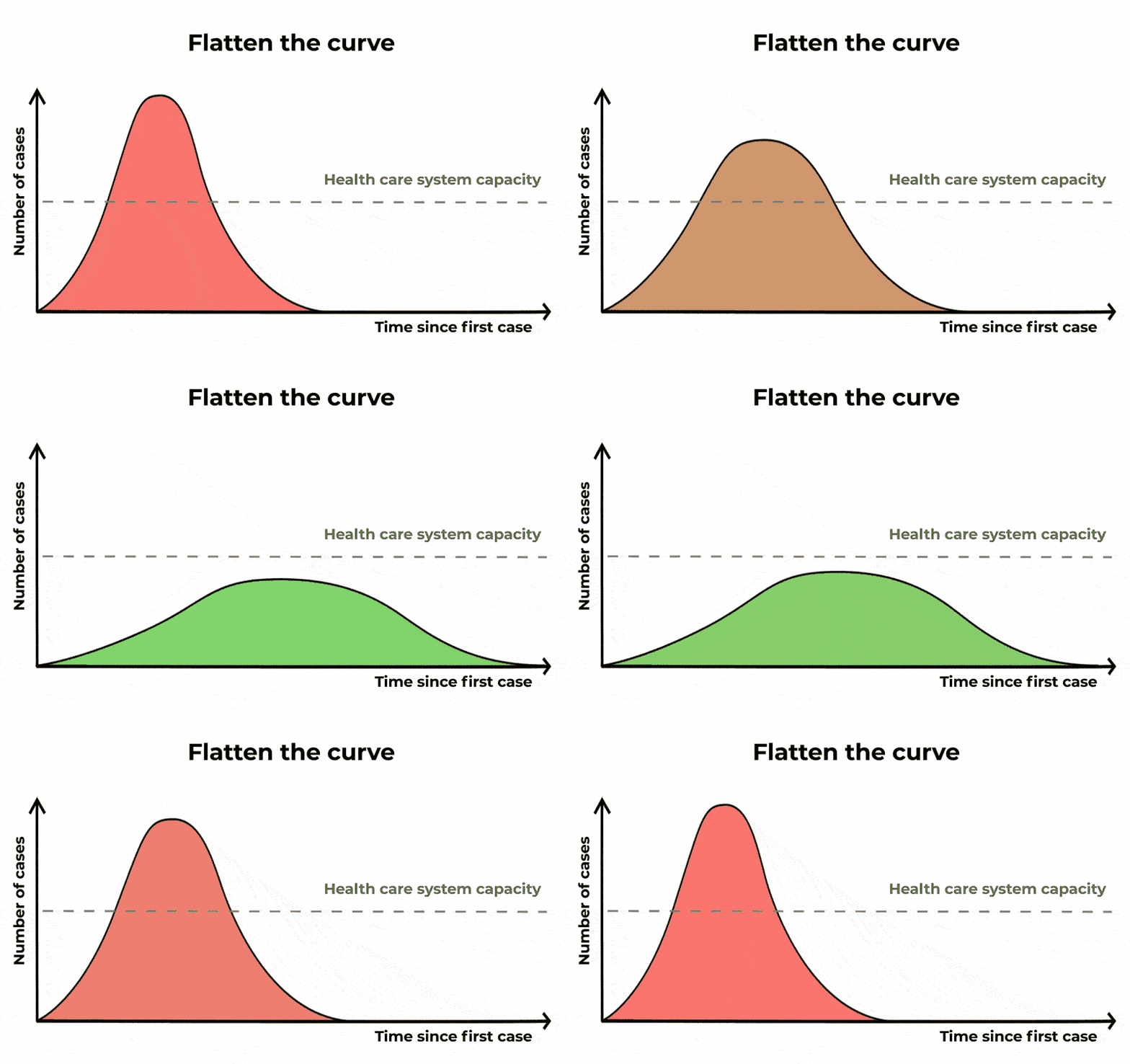 Flattening the curve is another way of saying slowing the spread. The epidemic is lengthened, but we reduce the number of severe cases presenting at the same time, causing less burden on public health systems. The Conversation/CC BY ND
In fact, until a vaccine is available, “flattening the curve” means the same number of people still get infected, but at a slower rate, so our health services can cope and we have as few deaths as possible.
If easing the burden on the health services is important to you, you can do your bit not just by following the coronavirus social distancing measures and washing hands frequently, but also getting your flu shot.
Read more: Why the flu shot cannot give you the flu (and why you should get one now)
The 2020 flu vaccine is now starting to become available for those aged over six months, and people should speak to their health-care provider about booking to get one sooner rather than later.
Authors: Lauren Bloomfield, Senior Lecturer, School of Medicine, University of Notre Dame Australia


 Hashtag.net.au
