

Household rat poisons found to be ‘unacceptable risk’ to native animals. So why aren’t they banned?
- Written by John White, Associate Professor in Wildlife and Conservation Biology, Deakin University
The Australian authority that regulates pesticides has finally released its long-delayed review of the rodenticide poisons used by millions of Australians to combat rat and mice infestations.
As researchers who study Australia’s amazing native owls (and more recently, the rodenticide poisoning of wildlife), we were extremely hopeful about its findings. We thought this review would make world-leading recommendations that would protect wildlife and set the global standard for regulating these toxic compounds.
Instead, the recommendations from the Australian Pesticides and Veterinary Medicines Authority (APVMA) leave Australians still reliant on rodent poisons that are responsible for most of the documented impacts on wildlife globally.

Why these poisons are a wildlife problem
Second-generation anticoagulant rodenticides (SGARs) which include brodifacoum, bromadiolone, difethialone, difenacoum and flocoumafen, are the core problem. These extremely potent poisons prevent normal blood clotting processes and ultimately lead to death, often via uncontrollable internal bleeding.
When a rat or mouse eats a SGAR-based bait, the poison remains in its body for up to a year. This is how it ultimately passes to predators and scavengers such as owls, frogmouths, raptors, quolls and goannas that eat the poisoned animal.
These native animals die slowly and painfully. This process, known as secondary poisoning, is well documented in predators in Australia and globally.
What the review found
The review acknowledges the science and highlights the risks that SGARs pose, not only to our wildlife and fragile ecosystems but also potentially to humans.
However, despite the risks and advice from scientists to ban SGARs, the review proposes keeping SGARs as the primary tool for Australia’s war on rodents. It described them as an “unacceptable risk”, but stopped short of recommending a blanket ban.
The review argues SGARs remain essential for rodent control, especially with rodents developing some resistance to older poisons. The proposed changes focus on mitigating exposure risk to non-rodents. These include changes to labels and the way bait is delivered, and packaging controls. Under these changes, SGARs will remain widely available to the public.
Ultimately the real difficulty – not adequately addressed – is broader than simply preventing non-rodents from consuming baits. The real issue lies with the nature of the toxins themselves.
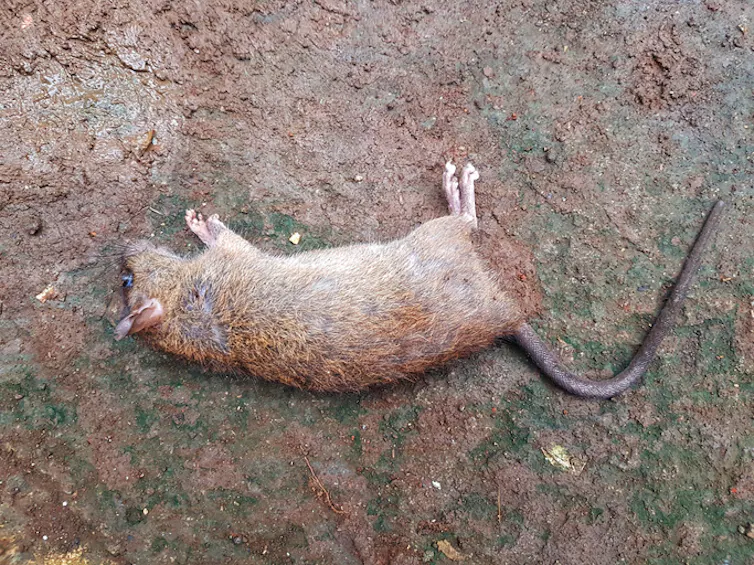
These poisons are highly effective at killing rodents, but they do not kill them quickly. After eating poisoned bait, a doomed “zombie” rodent will remain alive for several days, potentially up to a week. During this time, their behaviour changes. Normally cautious, these nocturnal animals become slower, disoriented and far more likely to be eaten by predators such as owls (or even your pet cat or dog).
Crucially, these poisoned “zombie” rodents can continue to eat more poisoned bait. By the time they die, they may contain very high concentrations of rodenticide.
Secondary poisoning is a predictable outcome
When a predator eats a poisoned rodent (or any other poisoned species), it also ingests its poison. This is unlikely to cause immediate death, but SGARs accumulate in the liver and remain there for up to a year. With repeated consumption of poisoned animals, the predator reaches a toxic threshold and dies.
Unfortunately, secondary poisoning is not an accidental or a misuse scenario. It is a highly predictable outcome of allowing the use of poisons in our ecosystems that accumulate in the body.
Paradoxically, the animals most affected by SGARs are the very species that help control mice and rat populations naturally. Predators such as owls breed more slowly than rodents. When rodenticides kill predators in urban and agricultural landscapes, rodent problems often worsen and spur further reliance on poisons. This creates a damaging feedback loop that Australia has been reinforcing for decades, one not addressed by the proposed changes.
Many researchers, including our colleagues and ourselves, argued during this review that meaningful reform requires either banning SGARs in Australia completely or severely restricting access so they are not available to the public. Other countries such as Switzerland and Canada have reached similar conclusions, and responded by significantly limiting access to these compounds with the intent of banning them.
Australia’s proposed changes move in the wrong direction, and leave us considerably behind much of the developed world. Australia will continue using rodenticides that cause the greatest harm, such as SGARs. And lower-risk alternatives that use the First Generation Anticoagulant Rodenticide (FGAR), such as Warfarin, face cancellation because they do not contain chemicals that make them bitter an aspect to try and make them less attractive to non-rodent species.
Warfarin-based baits are safer as they do not accumulate in the body of poisoned animals to the same extent and they are expelled from the body more quickly, reducing the risk of secondary poisoning.

Restriction will protect wildlife
This review could have broken the cycle of poisoning native Australian predators in the name of rodent control. Instead, it preserves a system that does not work here, or anywhere else in the world.
If Australia is serious about protecting its wildlife while managing rodents effectively, it must confront the role of SGARs directly. Adjusting labels and packaging cannot solve a problem driven by the chemistry of the poisons themselves.
We simply must do better. Until access to these compounds is meaningfully restricted, secondary poisoning will remain an inevitable — and entirely preventable — outcome. Many native animals will continue to die slow and painful deaths.
Authors: John White, Associate Professor in Wildlife and Conservation Biology, Deakin University


 Hashtag.net.au
