

How The Conversation's journalism made a difference in April
- Written by Benjamin Clark, Deputy Engagement Editor, The Conversation
Every month, we ask The Conversation authors what happened after we published their articles. Here are some of their stories from April 2021.
Academic insights reached millions
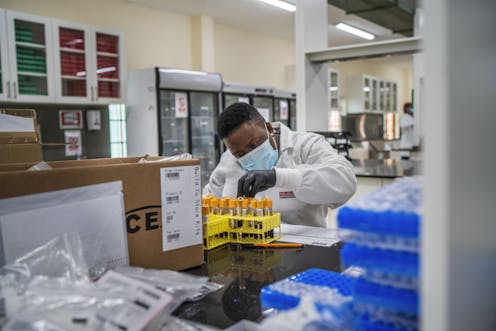
The story that garnered the most interest from our audience in April was this piece on why new COVID variants necessitate a global ‘maximum suppression’ strategy. It has been read more than 1.1 million times!
It was also republished by more than 28 other media outlets around the world - including The Guardian, ABC and the South China Morning Post. 84% of its readers were from countries outside Australia.
The second most-read piece was Ritesh Chugh from CQUniversity’s piece on how to deal with water damage to your phone, which received more than 570,000 reads. Ritesh said:
“As an academic, such a wide readership provides great testimony of our public scholarship”
On social media, we turned Shams Rahman and Aswini Yadlapalli from RMIT’s revealing piece on the exploitation of garment workers into an Instagram video, visualising the tiny percentage of remuneration workers derive from an average t shirt’s cost. It was viewed more than 33,100 times.
Putting expertise in front of decision makers
The articles which most clearly impacted government action in April were Lucinda McKnight from Deakin University’s piece about teaching students to work with robot writers, and Marcus Carter from the University of Sydney’s piece on why screen games are still ‘real play’.
Both McKnight and Carter were invited by the NSW Department of Education to contribute their expert analysis to the department’s teaching journal. McKnight was also contacted by a London-based start-up and RMIT academics to discuss artificial intelligence and future advisory collaborations.
After Neeraja Sanmuhanathan from the University of Notre Dame wrote about survivors of sexual assault, NSW Health republished the article in their community health newsletter and she was contacted by a Mandela University psychologist and Curtin University journalist for possible collaboration.
Turning to the NGO space, Anti-Slavery Australia turned four comics The Conversation created for this article by UTS’s Jennifer Burn into four short animation videos. They’re also incorporating them into a course on understanding and identifying modern slavery. It’s good to see the article is still making waves two years on!
Impacting our cultural institutions
Multiple authors have also seen their articles impact museums and cultural institutions.
After Paola Balla’s wrote about Dark Mofo’s call out for Indigenous Australians’ blood, she has been in regular contact with Fiona Hamilton, a Trawoolway artist in Tasmania who has worked with Dark Mofo and MONA over the past seven years. She gave a very detailed account of the troubled history there with local Aboriginal community and artists, and spoke directly with museum owner David Walsh. Hamilton has since severed her working relationship with the museum and its festival offshoot. Paola said:
“Thanks again for the invitation to write for The Conversation, it is my first time and has been a very rewarding process seeing that Aboriginal community members and other writers and academics have been very supportive. Most importantly Tasmanian Aboriginal artists have shared their approval and support and feel that they are being listened to on a national and international scale.”
After UWA’s Kailah Thorn wrote about how to hunt fossils responsibly Tom Kapitany, rock, mineral and fossil retailer/exporter with Crystal World visited Kailah at the Edward de Courcy Clarke Earth Science Museum where she works. This resulted in a donation from Tom of a local fossil specimen for display in the museum for education and outreach purposes.
Finally, after explaining how DNA and the sequence of coronavirus makes surprisingly lovely music, Mark Temple from Western Sydney University - who was also a drummer with the 90s Sydney band The Hummingbirds - was invited to do a public talk and play the music at Sydney’s city recital hall.
Authors: Benjamin Clark, Deputy Engagement Editor, The Conversation
Read more https://theconversation.com/how-the-conversations-journalism-made-a-difference-in-april-160451

 Hashtag.net.au
