

Yes, a 16-day incubation period for COVID is possible. But it's extremely rare
- Written by Catherine Bennett, Chair in Epidemiology, Deakin University
Over the past week, three returned travellers — one in New South Wales and two in Victoria — have tested positive to COVID-19 shortly after leaving hotel quarantine.
The cases in Victoria appear almost certainly to have been acquired in hotel quarantine. The individuals had quarantined at the Holiday Inn, where eight staff members and guests have been now infected. Authorities are investigating.
But genomic sequencing has now indicated the NSW case was not picked up in hotel quarantine. So it’s possible either the person was still shedding virus from an earlier infection they contracted overseas, or that they incubated the virus for longer than 14 days.
The incubation period is the time between the point at which someone is exposed to the virus and the onset of symptoms (bearing in mind of course that not everyone who tests positive to COVID-19 will develop symptoms).
Theoretically, it is possible for a person to incubate the virus for longer than 14 days. But how likely is it?
The evidence
Most people who are exposed to SARS-CoV-2, the virus that causes COVID-19, will not go on to develop an infection. Sometimes the dose is not high enough, and/or the person can mount a successful immune response to prevent the virus establishing itself in their system.
But of those who do develop an infection, the evidence suggests almost all will return a positive test within 14 days of being exposed to the virus. A review summarising data from 21 studies reported only 1% of people incubated the virus beyond two weeks.
It’s important to note this review is a preprint, so it hasn’t received the same scrutiny as other published research.
Read more: Viral incubation: why do bugs hide before they strike?
But it found the average incubation period to be 5.9 days, which aligns with peer-reviewed research indicating the incubation period for COVID-19 is within the range of five to six days.
This is similar to other coronaviruses, notably SARS and MERS. Average incubation periods of other acute respiratory viral infections vary; 1.4 days for influenza A, 0.6 days for influenza B, and 12.5 days for measles.
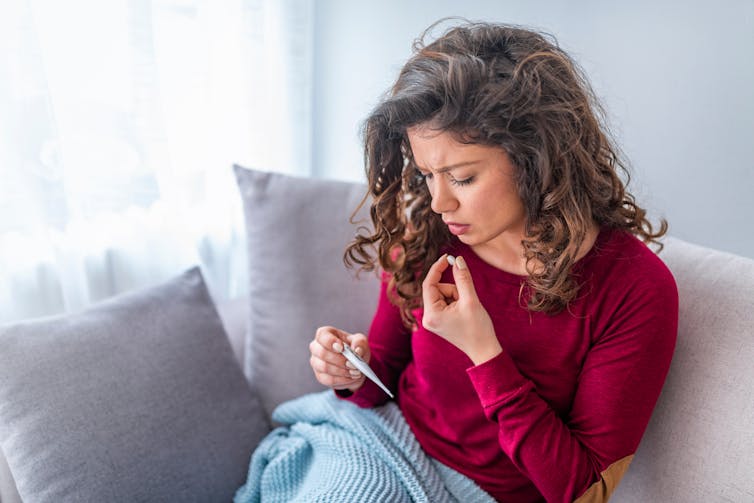 Different viruses have different incubation periods.
Shutterstock
Different viruses have different incubation periods.
Shutterstock
The ‘day 16’ test
For the small minority of people who incubate the virus beyond 14 days, this can be related to underlying conditions, especially those that weaken a person’s immune response.
Over the weekend, NSW began testing returned travellers on day 16 — that is, two days after they finish hotel quarantine. This is how the latest case in NSW was detected.
The test is not compulsory and if the person doesn’t have symptoms, they don’t need to isolate until receiving their result.
This day 16 test is designed to pick up infections that may develop after the expected maximum 14-day incubation period on which Australia’s quarantine period is based.
Other states are reported to be considering implementing this measure too. This is a good safety net because, not only could it pick up the very rare case where a person might incubate the virus for longer, it could also catch missed cases of the virus being contracted in quarantine.
Read more: How long are you infectious when you have coronavirus?
Some places even have a shorter quarantine period than 14 days. The UK, for example, has just started a hotel quarantine program to try to protect against arrival of other new variants. The quarantine period is ten days.
So Australia is erring on the more cautious end of the spectrum.
Could the new variants affect the incubation period?
Most of the data we have on the incubation period for COVID-19 don’t capture the emerging variants of the virus. For example, most of the studies included in the review I mentioned above were conducted in China, and all were carried out in June 2020 or earlier.
If anything, it’s possible the new variants might have a shorter incubation period.
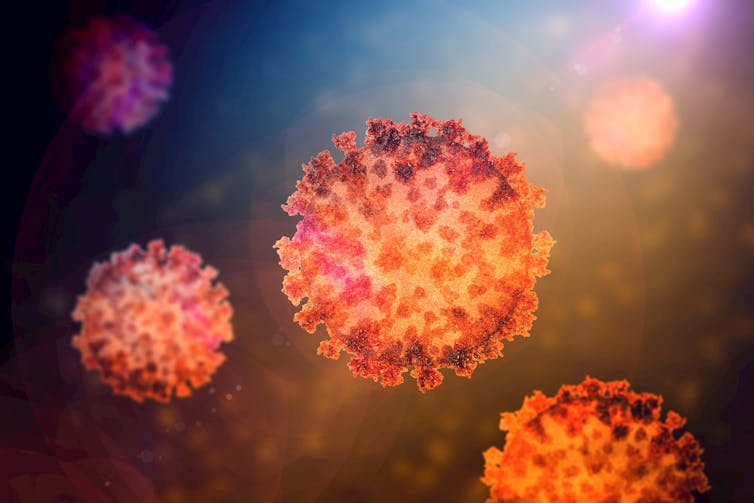 New variants can change the way the virus behaves.
Shutterstock
New variants can change the way the virus behaves.
Shutterstock
The accelerated rise in case numbers we’ve seen around the world with new variants means a greater proportion of people become infected following an exposure to these new strains, as we know these new variants can be more infectious. But a shortened incubation period could also be contributing.
These new variants are more efficient at establishing infections, we’re told, with the virus better at binding to, and invading, our cells. We might therefore assume a more efficient virus wouldn’t wait 14 days before establishing an infection. It would get on the job of replicating more quickly.
Although we need more information on these new variants before we can draw any conclusions, we can be reassured Australia’s two-week quarantine period should be ample time to detect the vast majority of cases.
This may change once we see what post quarantine testing reveals over the next while, but for now the priority must be making sure any cases within hotel quarantine don’t escape into the wider community.
Read more: Another hotel worker tests positive in Melbourne. It's time to move hotel quarantine out of cities
Authors: Catherine Bennett, Chair in Epidemiology, Deakin University

 Hashtag.net.au
