

One year after their brief war, how close are India and Pakistan to another conflict?
- Written by Stuti Bhatnagar, Lecturer, Indo-Pacific Studies, UNSW Sydney
A year has passed since conflict broke out between India and Pakistan, briefly raising fears of an all-out war between the two nuclear powers.
While violent conflict between the neighbours has been commonplace for the past 80 years, this latest round of fighting felt different.
Both sides used new weapons against one another, including cruise missiles, short-range ballistic missiles and drones. The level of mistrust and sharp rhetoric worsened considerably, significantly testing regional partnerships.
One year later, tensions remain high, with an underlying risk of further escalation.
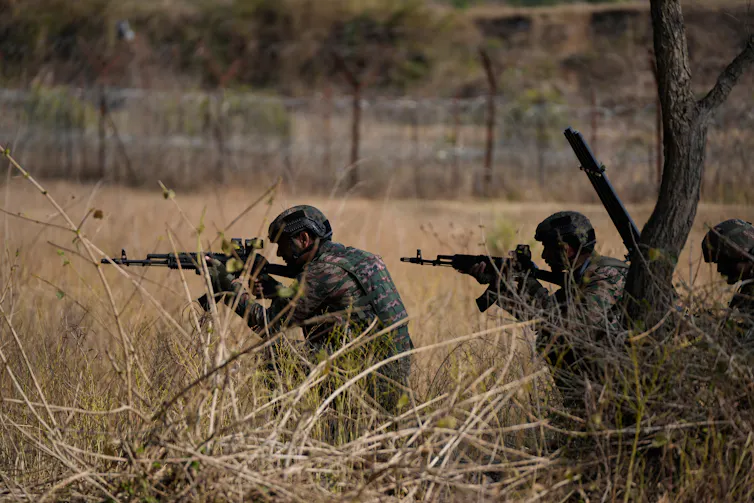
What happened last year?
The war broke out last May following a terrorist attack that killed 26 civilians in the Pahalgam area of Indian Kashmir on April 22.
Within days, Indian police claimed the Pakistan-based militant group Lashkar-e-Taiba was behind the attack. Pakistan vehemently denied any involvement.
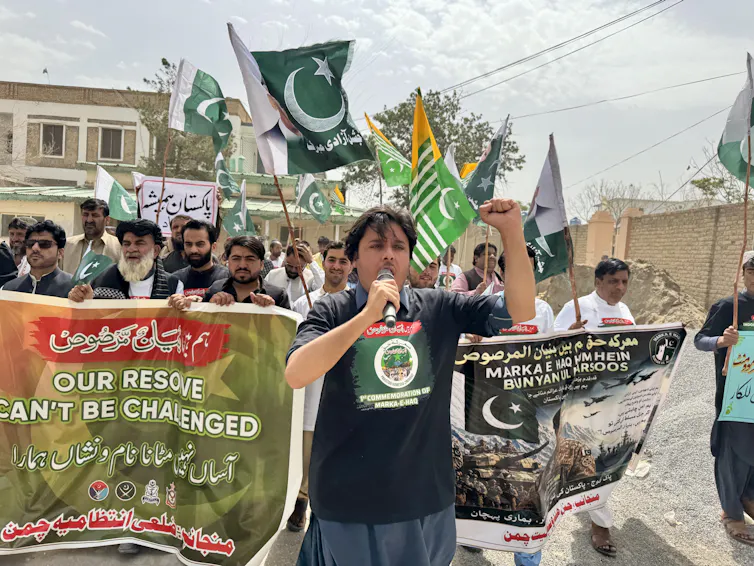
Then, on May 7, India launched Operation Sindoor against alleged terrorist strongholds in Pakistan, which prompted a Pakistani retaliatory attack, Operation Bunyan-un-Marsoos.
Dozens of people are believed to have been killed. As in any India-Pakistan conflict, the possibility of the use of nuclear weapons created further alarm.
The four-day conflict came to an end with a ceasefire on May 10. It was announced by the Trump administration, which claimed to have mediated the deal. This irritated India, but Pakistan nominated US President Donald Trump for the Nobel Peace Prize.
India nonetheless claimed victory, boasting of its ability to deliver precise attacks far inside Pakistani territory, exposing weaknesses in its rival’s air defences. Pakistan, meanwhile, claimed to have shot down five Indian fighter jets (which India denies).
Political ramifications
In Pakistan, the Pakistani military returned to the political mainstream following the conflict. After leading Pakistan’s military response to India, the chief of army staff, Syed Asim Munir, was elevated to field marshal, and then to the post of the country’s first chief of defence forces.
Munir’s influence has only grown since. He has become very close to Trump and has been a key figure in the negotiations between the US and Iran to bring an end to their war.
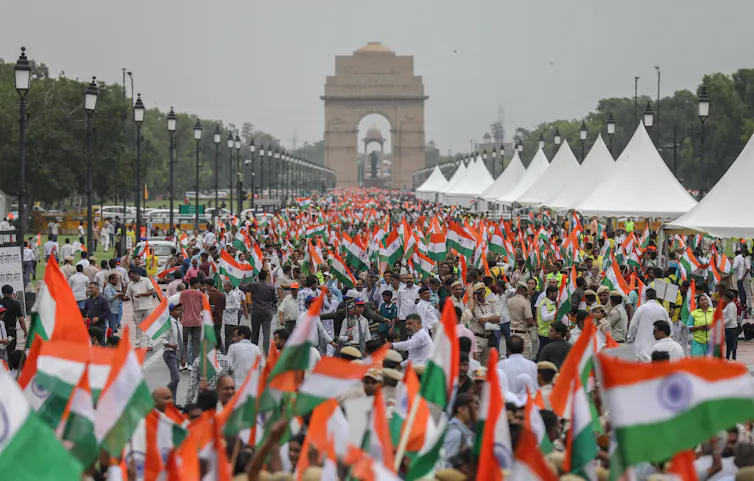
In India, Operation Sindoor was seen as a win for the Modi government’s decisive foreign policy, and was a moment of rare political consensus in the country.
However, in Kashmir, the terror attack raised fresh questions about the government’s claims of normalcy in the region – and its push to boost tourism – following the controversial revocation of Kashmir’s statehood in 2019.
In the weeks that followed the attack, security operations in the Kashmir valley shut down several tourist sites. This led to a sharp decline in visitor numbers and severely affected local businesses. Security operations also targeted civilians, alarming human rights experts.
Shifting regional dynamics
Perhaps the most significant impact of the conflict has been the difference in diplomatic engagements of both countries.
The war highlighted Pakistan’s operational cooperation with both China and Turkey. The Pakistani military used Chinese-built fighter jets and missiles in its attacks, as well as Turkish-made drones. Its satellite-based intelligence was enabled by China, too.
After the war, Pakistan also signed a new deal with the Trump administration to develop Pakistan’s oil reserves, and a defence pact with Saudi Arabia, a staunch US ally.
India had pursued a decade-long push to isolate Pakistan diplomatically, which made Pakistan’s increasing bonhomie with the US and Gulf states particularly awkward.
Prime Minister Narendra Modi’s once-close relationship with Trump, meanwhile, began to deteriorate over US tariffs and India’s purchase of Russian oil.
Modi’s ill-timed visit to Israel and the visible lack of influence in the US–Iran war has also raised questions about India’s professed role as a regional leader. It has highlighted the limits to India’s strategy of balancing its strategic partnerships, especially during conflict.
India has tried to engage in proactive diplomacy, dispatching delegations of MPs and former diplomats to more than 30 countries over the past year. While India claims these visits were a success, they haven’t done much to convince the world that Pakistan was the aggressor in their conflict.
Where do things go from here?
One year on, the political rhetoric on both sides is as charged as ever.
Both India and Pakistan have signalled a resolve for further escalation in future conflicts.
Despite a sliver of hope for secret backchannel talks, India continues to give stern warnings to Pakistan over its alleged support to terrorist groups.
India has also reiterated that a major water-sharing treaty between the countries would remain suspended until Pakistan takes steps to end its support for terrorism – leaving a major concern over water security unresolved.
In response, Pakistan has made clear any attempt to target Pakistan again would “trigger consequences” that would not be “geographically confined or strategically or politically palatable for India”.
The shifting geopolitics and heightened rhetoric have narrowed the space for any prospects of meaningful dialogue between the two. As a result, the alarmingly low levels of trust will remain.
The ceasefire holds for now, but the conflict continues unabated.
Authors: Stuti Bhatnagar, Lecturer, Indo-Pacific Studies, UNSW Sydney


 Hashtag.net.au
