

Why one of Australia’s most successful TV production companies is being shut down
- Written by Phoebe Hart, Associate Professor, Film Screen & Animation, Queensland University of Technology
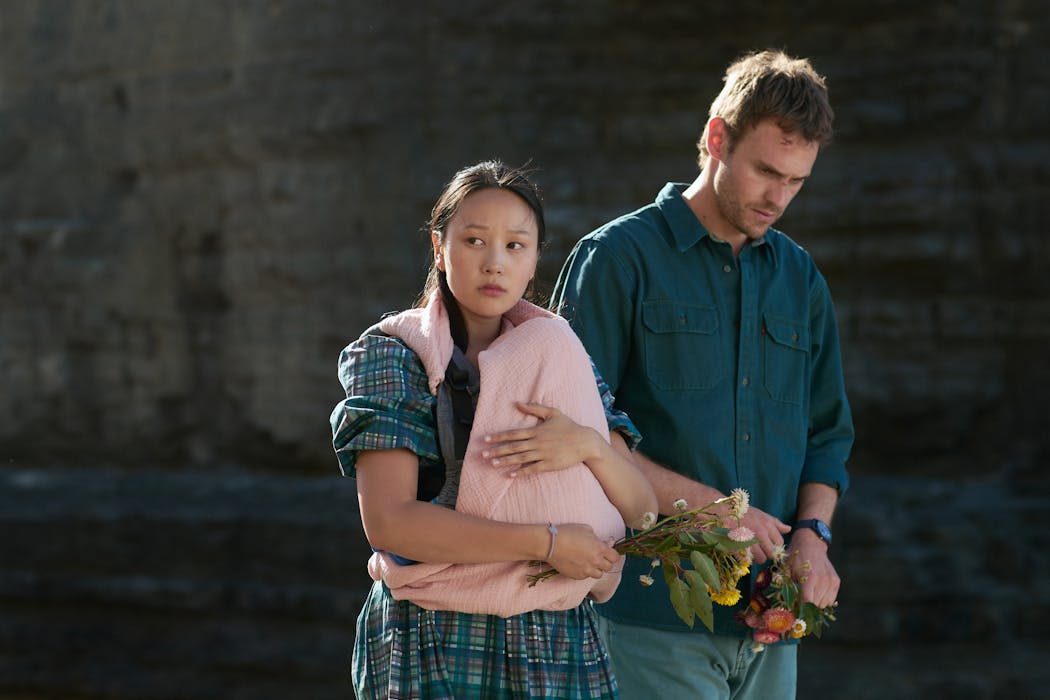
Members of the Australian screen industry have been shocked to learn one of the nation’s most successful and prolific production companies, Matchbox Pictures – and its subsidiary Tony Ayres Productions – will shut their doors this week.
Matchbox was closed by its parent company, Universal International Studios, and the closure has resulted in the loss of 30 full-time equivalent positions.
The reasons cited by Universal are vague. According to a media release, “extensive evaluation of the business and the broader production landscape” influenced the decision. The global production arm of NBCUniversal has said it will take on new business and talent on a case-by-case basis from here on.
This is crushing news for the local screen industry, which finds itself increasingly beholden to decisions made by overseas corporations.
18 years in the making
Matchbox Pictures was founded in 2008 by screen industry stalwarts Tony Ayres, Penny Chapman, Helen Bowden, Michael McMahon and Helen Panckhurst.
Together, they have made some of Australia’s most iconic television series including The Slap (2011). This series changed how the world perceived Australian drama, as an innovative, gritty morality play remade in the United States.
The Matchbox team was also responsible for other critically acclaimed and AACTA Award winning projects, such as Secret City (2016–19), Stateless (2020) and Glitch (2015–19), among others.
More recently, they gave us The Survivors (2025), the best performing local TV drama on Netflix in 2025.
As one of the bigger employers of local talent and crew, one might ask how this happened.
Acquisition by Universal
In 2011, Matchbox sold a majority stake to NBCUniversal. At the time it seemed like a shrewd move. It meant the company, which is headquartered in Sydney with offices in Melbourne and Singapore, would get better access to international markets, stronger global distribution channels, and the ability to upscale productions.
However, it also meant Matchbox was subject to global winds of change, rather than local breezes. And the wind is blowing. Comcast, which owns NBCUniversal, is in downturn, reporting a significant revenue decline and job cuts in 2025. This means they’re probably eager to lighten the load.
Another reason is the changing nature of streaming content regulation in Australia. The Labor government’s move last year towards regulating local content quotas for media giants such as Netflix was a big win for advocates.
But it also introduces uncertainty, which means international companies may choose to withdraw from the region instead of investing in Australian content.
There is no law requiring overseas content providers to maintain a presence in Australia. Although Universal has said it will continue to do business here, the new environment arguably makes maintaining a fully-staffed production arm less attractive.
The Matchbox closure is the first clear example of this.
Read more: New laws will force streaming giants to invest in local content – but it’s too soon to celebrate
A big step back
So, where does the recent closure leave the local industry? For one thing, we’re likely to see reduced capacity to nurture in-depth, large-scale local productions.
It also makes the future uncertain for up-and-coming practitioners, especially those from diverse backgrounds, which Matchbox was well-known for championing. The shutdown means the loss of salaried jobs and a consistent commissioning pipeline.
Matchbox was also a steady source of contract work for freelancers – whose situation is now even more precarious.
It’s possible the closure will lead to more opportunities for mid-size producers pitching their projects to broadcasters, studios and streaming platforms – especially with the introduction of new streaming quotas for local content.
There are some left in Australia that may step in to fill the gap: Hoodlum Entertainment, CJZ, Curio Pictures, Endemol Shine Australia, See-Saw Film, Beyond International and Goalpost Pictures spring to mind.
Then again, some of these are also owned by overseas interests. It’s a “watch this space” situation.
Authors: Phoebe Hart, Associate Professor, Film Screen & Animation, Queensland University of Technology


 Hashtag.net.au
