

women international students suffering alarming rates of sexual violence
- Written by Laura Tarzia, Professor and Co-Lead of the Sexual and Family Violence Program at the Department of General Practice & Primary Care, The University of Melbourne
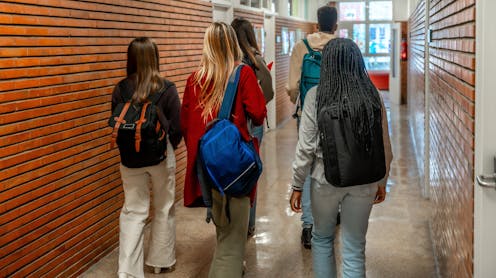
Every year, more than 700,000 international students leave their homes to study in Australia.
Around half are women.
For most of these students, the experience is positive. Many choose to remain in Australia for employment or migration.
However, for others, what should be a dream opportunity is shattered by experiences of violence.
An unsafe space for some
Australia has long been regarded as a safe society. However, international students’ safety was questioned in 2009 after a series of attacks on Indian students, and again in 2020 when a survey of 6000 students revealed a quarter had experienced racist abuse during the COVID pandemic.
Addressing these issues is important.
For women international students, violence can also be gender-based, including intimate partner violence and sexual violence.
These issues facing women international students have mainly been overlooked by institutions, government policies and services, despite causing enormous harm to health and wellbeing.
Our research
In our recent project, we examined the sexual and intimate partner violence experiences of women international students in Australia.
For the past few years we have been running a national survey of students focused on “health, relationships, consent and wellbeing”.
The survey was offered in five languages other than English (Mandarin, Hindi, Portuguese, Vietnamese and Nepali). It referred to “unwanted sexual experiences” rather than talking about “sexual assault”, to try to reduce participant discomfort.
A total of 1491 students responded nation-wide. Nearly one-third were born in China, 10% in the Philippines and 10% in India, reflecting the major international student groups currently studying in Australia.
Most (82%) had a first language other than English.
Our findings suggest both sexual violence and intimate partner violence are common among women international students. More than 40% had experienced at least one incident of sexual violence since arriving in Australia.
One in five had experienced forced or coerced sex. More than 45% who had ever been in a relationship had experienced intimate partner violence in the 12 months prior to the survey.
Almost all of this violence was perpetrated by men.
It’s important to note this was not a representative sample in the statistical sense, because students volunteered to take part. However, our findings are still concerning.
International students are by no means the only group affected by sexual and intimate partner violence. Both are widespread in Australia, including among domestic students.
The 2021 National Student Safety Survey found one in six students had experienced sexual harassment since starting university, and one in 20 had been sexually assaulted.
Less is known about intimate partner violence, but research suggests it is also common.
In the wider Australian community, sexual violence affects around one in five women over the age of 15. One in four report intimate partner violence.
What else did we discover?
We also looked at what factors might be linked to this violence against women international students.
We found students who experienced financial stress, housing insecurity, and low social support were more likely to report both sexual violence and intimate partner violence.
In an earlier study for this project, we interviewed 30 international students about their experiences seeking help after sexual or intimate partner violence.
Many felt socially isolated and had no-one to turn to. Support from tertiary education providers was mixed and students worried about their visa being cancelled.
Often, they did not tell their families back home what had happened for fear of causing shame or distress.
Multiple barriers such as cost, ineligibility for services, and confusion about the complex health and legal systems in Australia prevented them from accessing support privately.
Some felt: “Australia doesn’t care about me”.
Some positive steps, but more is needed
Last month, the federal government launched the National Student Ombudsman as part of its national action plan addressing gender-based violence in higher education.
The government has also recently unveiled the National Higher Education Code to Prevent and Respond to Gender-Based Violence, outlining expectations and standards for addressing the issue.
These are positive changes.
However, international student voices have not been heard in the development of these, or other policies and guidelines focused on gender-based violence in higher education.
Recommendations addressing the specific needs of international students are lacking.
There is an urgent need to tackle the structural challenges faced by international students when seeking help.
Our findings suggest tertiary education providers could be doing more to keep women international students safer. Culturally appropriate, trauma-sensitive education around consent and relationships, delivered in-language, is important.
But this on its own is not enough.
International students experiencing financial stress or housing insecurity need to be supported to avoid increasing their risk of gendered violence. Strategies could be put into place to build social connection, so students are less isolated when they arrive in Australia.
At government levels, subsidised social support, health and welfare services need to be made available and without restrictions to all international students.
We need to take our duty of care towards international students’ health, wellbeing and safety more seriously.
International education is Australia’s largest services export, contributing about A$51 billion in 2023-24.
It’s in our interest to better support international students to study safely in Australia.
The authors would like to acknowledge the input of Dr Adele Murdolo from the Multicultural Centre for Women’s Health for this article.
Authors: Laura Tarzia, Professor and Co-Lead of the Sexual and Family Violence Program at the Department of General Practice & Primary Care, The University of Melbourne

 Hashtag.net.au
