

Hitting the beach? Here are some dangers to watch out for – plus 10 essentials for your first aid kit
- Written by Andrew Woods, Lecturer, Nursing, Faculty of Health, Southern Cross University
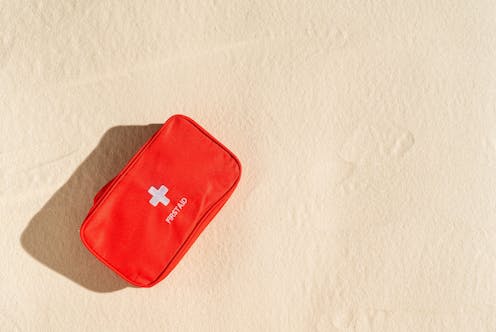
Summer is here and for many that means going to the beach. You grab your swimmers, beach towel and sunscreen then maybe check the weather forecast. Did you think to grab a first aid kit?
The vast majority of trips to the beach will be uneventful. However, if trouble strikes, being prepared can make a huge difference to you, a loved one or a stranger.
So, what exactly should you be prepared for?
Knowing the dangers
The first step in being prepared for the beach is to learn about where you are going and associated levels of risk.
In Broome, you are more likely to be bitten by a dog at the beach than stung by an Irukandji jellyfish.
In Byron Bay, you are more likely to come across a brown snake than a shark.
In the summer of 2023–24, Surf Life Saving Australia reported more than 14 million Australian adults visited beaches. Surf lifesavers, lifeguards and lifesaving services performed 49,331 first aid treatments across 117 local government areas around Australia. Surveys of beach goers found perceptions of common beach hazards include rips, tropical stingers, sun exposure, crocodiles, sharks, rocky platforms and waves.
Sun and heat exposure are likely the most common beach hazard. The Cancer Council has reported that almost 1.5 million Australians surveyed during summer had experienced sunburn during the previous week. Without adequate fluid intake, heat stroke can also occur.
Lacerations and abrasions are a further common hazard. While surfboards, rocks, shells and litter might seem more dangerous, the humble beach umbrella has been implicated in thousands of injuries.
Sprains and fractures are also associated with beach activities. A 2022 study linked data from hospital, ambulance and Surf Life Saving cases on the Sunshine Coast over six years and found 79 of 574 (13.8%) cervical spine injuries occurred at the beach. Surfing, smaller wave heights and shallow water diving were the main risks.
Rips and rough waves present a higher risk at areas of unpatrolled beach, including away from surf lifesaving flags. Out of 150 coastal drowning deaths around Australia in 2023–24, nearly half were during summer. Of those deaths:
- 56% occurred at the beach
- 31% were rip-related
- 86% were male, and
- 100% occurred away from patrolled areas.
People who had lived in Australia for less than two years were more worried about the dangers, but also more likely to be caught in a rip.

Read more: Drugs and the sun – your daily medications could put you at greater risk of sunburn
Knowing your DR ABCs
So, beach accidents can vary by type, severity and impact. How you respond will depend on your level of first aid knowledge, ability and what’s in your first aid kit.
A first aid training company survey of just over 1,000 Australians indicated 80% of people agree cardiopulmonary resuscitation (CPR) is the most important skill to learn, but nearly half reported feeling intimidated by the prospect.
CPR training covers an established checklist for emergency situations. Using the acronym “DR ABC” means checking for:
- Danger
- Response
- Airway
- Breathing
- Circulation
A complete first aid course will provide a range of skills to build confidence and be accredited by the national regulator, the Australian Skills Quality Authority.
Read more: Snakes are waking up. What should you do if you're bitten? And what if you're a long way from help?
What to bring – 10 first aid essentials
Whether you buy a first aid kit or put together you own, it should include ten essential items in a watertight, sealable container:
- Band-Aids for small cuts and abrasions
- sterile gauze pads
- bandages (one small one for children, one medium crepe to hold on a dressing or support strains or sprains, and one large compression bandage for a limb)
- large fabric for sling
- a tourniquet bandage or belt to restrict blood flow
- non-latex disposable gloves
- scissors and tweezers
- medical tape
- thermal or foil blanket
- CPR shield or breathing mask.
Before you leave for the beach, check the expiry dates of any sunscreen, solutions or potions you choose to add.
If you’re further from help
If you are travelling to a remote or unpatrolled beach, your kit should also contain:
- sterile saline solution to flush wounds or rinse eyes
- hydrogel or sunburn gel
- an instant cool pack
- paracetamol and antihistamine medication
- insect repellent.
Make sure you carry any “as-required” medications, such as a Ventolin puffer for asthma or an EpiPen for severe allergy.
Vinegar is no longer recommended for most jellyfish stings, including Blue Bottles. Hot water is advised instead.
In remote areas, also look out for Emergency Response Beacons. Located in high-risk spots, these allow bystanders to instantly activate the surf emergency response system.
If you have your mobile phone or a smart watch with GPS function, make sure it is charged and switched on and that you know how to use it to make emergency calls.
First aid kits suitable for the beach range in price from $35 to over $120. Buy these from certified first aid organisations such as Surf Lifesaving Australia, Australian Red Cross, St John Ambulance or Royal Life Saving. Kits that come with a waterproof sealable bag are recommended.
Be prepared this summer for your trip to the beach and pack your first aid kit. Take care and have fun in the sun.
Authors: Andrew Woods, Lecturer, Nursing, Faculty of Health, Southern Cross University

 Hashtag.net.au
