

5 ways to pack a lower-waste lunch box
- Written by Neha Lalchandani, Research Fellow, Global Centre for Preventive Health and Nutrition, Deakin University, Deakin University
If you pack school lunchboxes for your children, you’ll know it can sometimes feel like a real slog.
It needs to be easy to prepare, nutritious and something children will actually eat. On top of this, there is increasing awareness it should be friendly for the environment and not generate food and plastic waste.
As a 2021 OzHarvest report noted, Australian students throw away an estimated 5 million uneaten sandwiches, 3 million pieces of whole fruit and 3 million items of packaged foods each year.
As students return to school, here’s what schools and families can do to pack lower-waste lunches.
Our research
My colleagues and I have been researching what South Australian families put in lunchboxes and why.
In our 2025 study of 673 preschool and primary school lunchboxes, we found 53% of all packaged items in lunchboxes were single-use plastics, mostly from snacks. The most common packaged snack types were chips and muesli bars.
We found families tend to let children’s preferences drive what they pack – because if food comes home untouched, kids can go hungry or food may end up in the bin.
Parents also told us they tend to rely on packaged foods because they are busy and have little time to prepare school lunches.
It’s not that they don’t care about sustainability, but choosing familiar packaged items they know their children will definitely eat take priority.
How schools can make eating easier
Our research also found primary school eating times can be short – only around ten minutes at lunch – as children are keen to get out and play.
So schools should consider extending eating time to allow children to be more settled and eat more of what’s packed. This can mean less waste and fewer hungry moments later in the day. Other research shows longer seated time for eating means children are more likely to eat fruits and vegetables.
Schools could also consider scheduling eating times after play. While teachers and parents may worry children will get too hungry, research suggests scheduling play before lunch can help children eat more of their meal, and more nutritious items too. This is because they arrive at lunch with a healthy appetite and less urgency to rush through eating.
Schools can also incorporate food and sustainability literacy into the curriculum, to help kids embrace healthier and less-packaged foods. Schools can also encourage more “nude food” (packaging-free) days, provide families with healthy, low-waste lunchbox suggestions and have recycling and compost bins handy in the playground.
How can you pack a low-waste lunchbox?
1. Talk to your child about what they like to eat at school and how much
This allows them to tell you what works for them at school – which may be different from at home. Invite them to pack the lunchboxes with you the night before school when there is more time.
This can build independence and encourages children to take more responsibility for what they eat at school. Perhaps if they have packed it and understand the work involved, they are more likely to eat it.
2. Substitute packaged snacks for alternatives
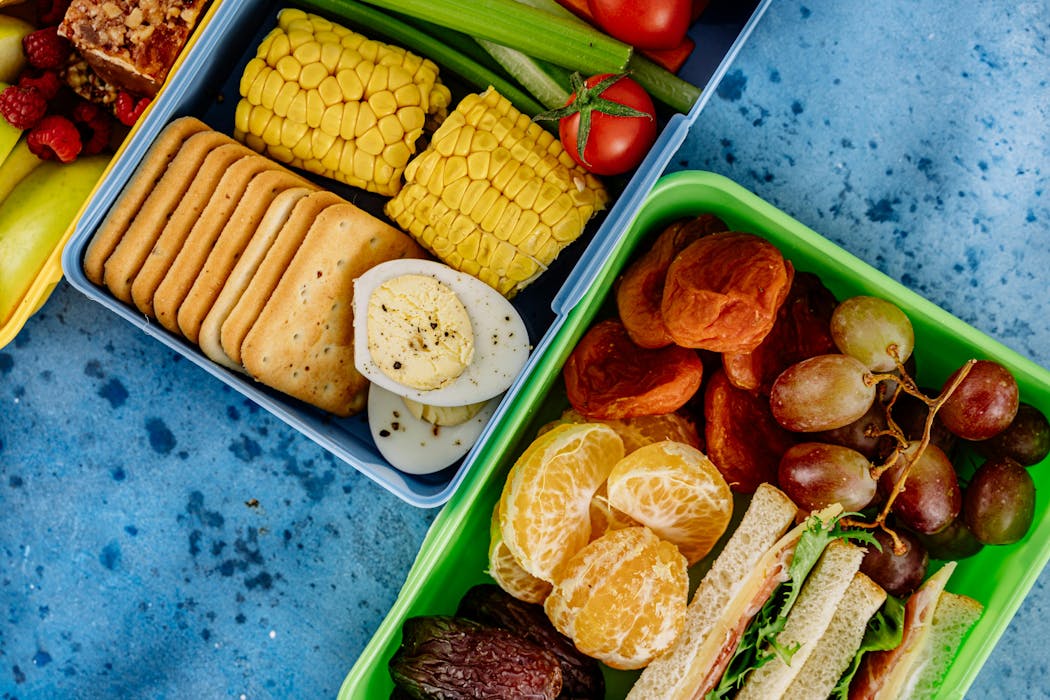
Try packing fruits that need no preparation. Also consider vegetable sticks and boiled eggs (you can prep them in a batch and store in the fridge).
You can make a batch of savoury muffins, home-made popcorn (chuck kernels in a brown paper bag and microwave) or your own portions of low-sugar yoghurt in reusable containers.
3. Stock up on reusable containers
There are lots of options to consider, including:
bento-style, compartmentalised lunchboxes are great for packing a variety of items and they can keep foods separate, preventing soggy snacks
small stackable tubs can be used for yoghurt, fruit chunks, boiled eggs and veggie sticks. Look for clear containers (so kids know what’s inside) with leak-resistant lids
reusable and washable fabric or silicone snack bags for sandwiches, crackers and other dry snacks like popcorn and mini muffins.
4. Avoid these items
Avoid cling film, plastic bags and foil. Also avoid supermarket snacks in individual plastic wrappers – such as popcorn or bars.
5. Make it manageable
We know preparing school lunchboxes can be demanding for families. So if you are going to make some changes, it’s OK to start small. You don’t need to prepare everything from scratch everyday. A starting point could be using more reusable containers and portioning bulk-bought foods.
Authors: Neha Lalchandani, Research Fellow, Global Centre for Preventive Health and Nutrition, Deakin University, Deakin University


 Hashtag.net.au
