

NZ is taking aim at feral cats. Are we ready for the ethical and practical implications?
- Written by Courtney Addison, Senior Lecturer, School of Science in Society, Te Herenga Waka — Victoria University of Wellington
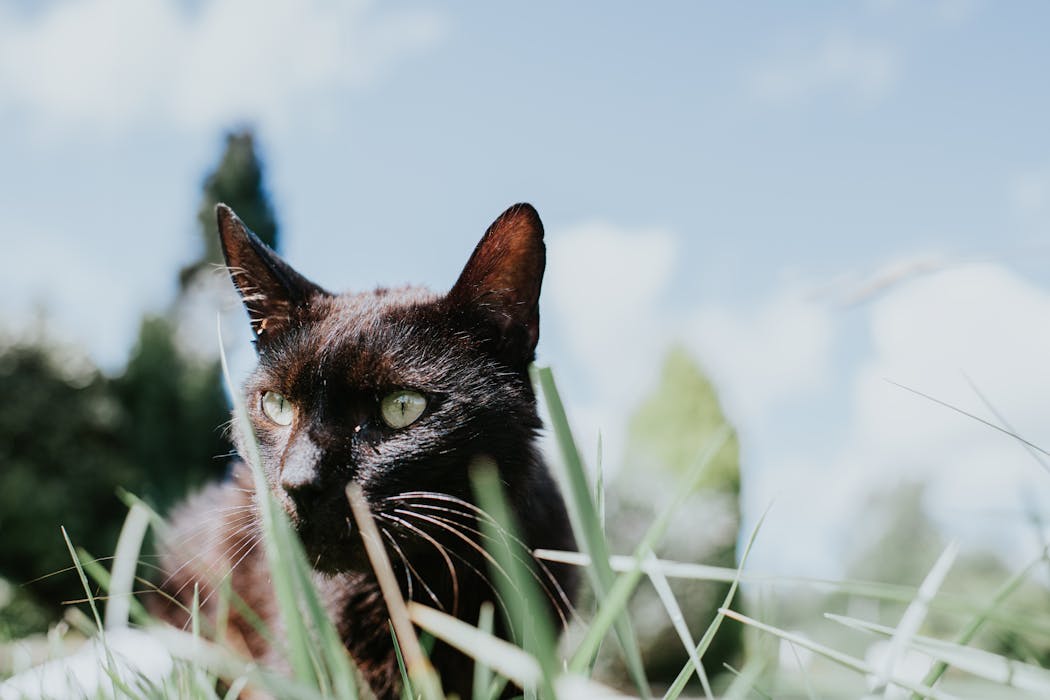
Conservationists have long anticipated the recent announcement that the national effort to eradicate possums, stoats and rats will now include feral cats.
But the government’s decision steers New Zealand’s Predator Free 2050 mission into potentially fractious territory.
It suggests conservation messaging has effectively recast wild-living cats as predators. In doing so, they become the kind of problem that can be solved through the conventional logic of pest control.
The new policy rests on a crucial distinction between feral cats and others, and hinges on their degree of human attachment. A feral cat has no human relationships, while domestic and stray cats have greater involvement in human worlds.
Legally, feral cats are already classified as pests and research suggests this designation is broadly accepted. But as one pest control operator recently told me, even a pet cat in a cage looks and acts feral if it is trapped and afraid.
Conversely, stray and feral cats are often re-homed and made into loving companions. Indeed, cats show remarkable behavioural flexibility – a reminder that deterministic assumptions about species can be risky.
Making feral cats a target species also reflects culture change in real time. There is nothing “natural” about which animals we choose to kill and which we choose to protect.
Although some species’ deaths are widely normalised – think of the few animals we kill in their millions for food – that sense of normality is shaped by deliberate efforts to frame certain animals in particular ways.
As several commentators have noted, the idea of eradicating cats caused public dismay only a decade ago. Today, it is not only thinkable, but doable.
How cats became Predator Free’s next target
The culture shift is likely due to several things, possibly including a growing confidence in the Predator Free mission, careful coalition building by the National Cat Management Group, and a wave of research into cats’ ecological impacts.
We have also heard sustained and strategic messaging from Predator Free that describes cats as “among the most devastating predators in Aotearoa”.
But feline flexibility – cats’ ability to be both a smoochy pet and a stealthy killer, potentially both over the course of a lifetime or even a day – might also be cause for caution.
At a recent Predator Free hui, for instance, one volunteer asked for tips on what to do with a trapped cat. The cautionary response was that the cat might be shot or possibly bludgeoned. (The Animal Welfare Act prohibits drowning because of its cruelty.)
This is quite different from the trapping methods mainly used now, and from the kinds of lethal actions volunteer trappers normally carry out.
Current guidelines say kill traps should only be used in very remote areas; everywhere else, live-capture cage traps are the only option. The result, as you’d expect, is a live, enclosed cat.
Kill traps that meet National Animal Welfare Advisory Committee standards are a kind of “moral delegate”. They remove some of the ethical complexity from the act of killing and make the job more straightforward.
Killing live-trapped cats could instead invite a degree of moral reflection –perhaps even prompt a wider conversation about animal welfare.
Predator Free 2050’s 2020 strategy made no mention of animal welfare, beyond citing the Animal Welfare Act. And its latest research strategy is similarly focused elsewhere.
But the addition of feral cats to the official predator list is an opportunity to engage with these difficult questions. Should anyone be able to kill a trapped cat? What standards and protocols might be necessary?
The cultural catch with cats
It’s easy to see why welfare has not been front and centre of pest control conversations to date.
Until now, the Predator Free 2050 target species have been firm cultural outcasts, regarded as an ecological problem and laden with unfavourable symbolic associations. Cats, even feral ones, are a different beast.
Rather than being associated with viciousness, dirtiness and overpopulation like many other pests, cats are more commonly associated with companionship and cuteness.
Even their hunting skills have historically been a source of value and appreciation, as testified by the use of cats as “ratters” in workplaces, homes and ships.
Although only feral cats fall under the Predator Free remit, their domestic counterparts are already part of the conversation as well.
For example, the multi-stakeholder National Cat Management Group is proposing a National Cat Management Act as part of a broader, welfare-oriented cat strategy that encompasses feral, stray and companion animals.
This too raises questions about what kinds of social creatures we think cats are, or want them to be. Should they become family members who stay in the home? Or do people want cities and neighbourhoods where they encounter cats as well as birds in public spaces?
And what about us? What kind of “cat people” are we?
Authors: Courtney Addison, Senior Lecturer, School of Science in Society, Te Herenga Waka — Victoria University of Wellington


 Hashtag.net.au
