

the true, non-American origins of Halloween
- Written by Pamela O'Neill, Sir Warwick Fairfax Lecturer in Celtic Studies, University of Sydney
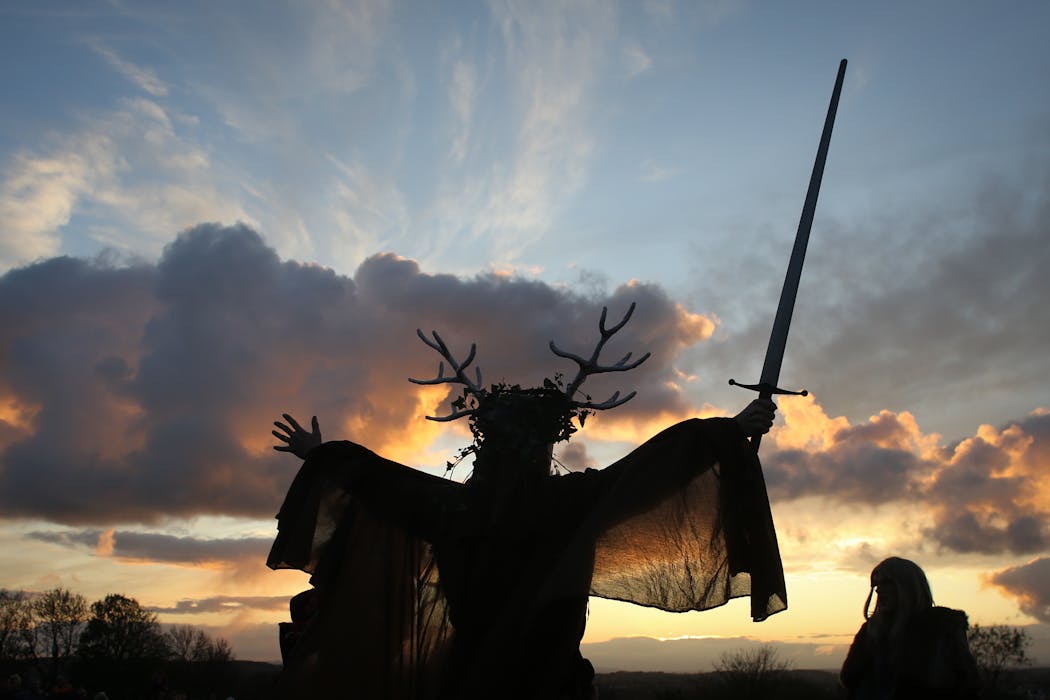
We all know how commercial Halloween has become, with expensive dress-ups, trick-or-treat “candy” and fake cobwebs (please don’t – they kill birds!).
But if you’ve ever dismissed Halloween as an American invention, you might want to rethink that.
For at least the past couple of millennia, the changing of the seasons has been marked among Celtic peoples with festivals at recognised times of year.
One of these was known by the Irish and Scottish Gaels as Samhain (pronounced “sah-win”), celebrated at the onset of winter. In the northern hemisphere, this falls around the end of October, although the tradition predates our modern calendar.
Samhain and the rhythms of the farming year
At Samhain, the harvest would be over, the last livestock would be brought back from the summer pastures, and people would prepare for the winter.
The old Gaelic saying “Oidhche Shamhna theirear gamhna ris na laoigh” (on Samhain night, calves become stirks) shows us how closely the idea of Samhain is tied to the rhythms of the farming year. (A stirk is a beast aged between six and 12 months.)
Summer in Gaelic culture meant outdoor life – young family members staying up in the hills watching the grazing livestock, renewal of the thatch on the family home, growing and harvesting crops.
Winter meant long hours inside the house, rationing the food that had been stored.
Samhain became an opportunity for one last celebration of nature before the long period indoors.
Seasonal duties were completed. Beasts unlikely to survive would be butchered, with part of the meat preserved and part used in a shared meal.
Bonfires would be lit for a last outdoor party, also providing warmth, invoking protection and fertility.
Fires were probably a way of mimicking the warmth and light of the Sun – holding back the winter darkness a little longer, protecting against evil by appeasing the old gods or new saints.
There’s also a long-held Celtic belief that at liminal times like Samhain – on the cusp between summer and winter – the veil between the human and spirit worlds was especially thin.
This meant otherworldly beings or spirits, particularly those of the ancestors, might be found roaming in our world.

The forerunners of our modern trick-or-treaters
Various Samhain activities, recorded from the early 18th century, reflect uneasiness about the possibility of encountering spirits, but also the fun of the bonfire party.
Many involved divination: attempts to predict a future spouse or otherwise foretell the future, are particularly widely recorded.
Acts of mischief by perpetrators unknown (likely teenagers), not all of them benevolent, were also common at Samhain in parts of Scotland and Ireland.
Gates might be removed and hidden, meaning livestock might stray. Chimneys might be blocked with turnips, trapping smoke in the house. Houses might be pelted with vegetables, wheels taken from carts, boats pulled up above the waterline, or chamber pots tied to doors.
Some people carved ghoulish faces into turnips, into which a light (usually a smouldering peat or ember in the rural areas, but sometimes a candle) would be inserted. It may originate from the practice of carrying a smouldering peat to light the way, or it may originate from the idea of pre-emptive frightening of any spirits wandering abroad. This is the likely origin of today’s pumpkin carving.
Perhaps the peculiar combination of uneasiness and fun led to the most widespread Samhain activity: guising.
Guisers might be considered the forerunners of our modern trick-or-treaters, but this was not a matter of dressing as your favourite character, or donning a fetching witch’s hat.
Guisers could be genuinely terrifying, especially for young children.
In the island of South Uist, for example, masks made from sheepskin with features painted on them were often paired with wigs of straw and old clothes or animal skins that concealed the form of the person inside. Sometimes a sheep’s skull might be added.
YouTube/The National Trust for Scotland Foundation USA.Guisers would visit neighbouring houses, challenging the householders to guess their identities, perhaps reciting rhymes, riddles or songs, before accepting a scone or other food and going on their way.
There are two explanations of why guising began.
One is that by obscuring their identities, guisers would evade any hostile spirits seeking to harm them.
The other is that guisers were themselves imitating the ancestor spirits, and trying to frighten others.
Both are possibly true. The idea that the evening would morph into a sharing of songs, stories and food, surely holds the kernel of modern trick-or-treating.
All traditions change over time
In the 18th and 19th centuries, during the infamous Highland Clearances and Great Irish Famine, a great deal of the rural populations of Scotland and Ireland were relocated – often against their will – to North America.
In those relocated settlements, what could be more natural than to reproduce these familiar, and perhaps comforting, rituals of home?
The name Halloween refers to the Christian tradition of All Souls’ Day falling on November 1: the night before is All Souls’ (or All Hallows’) Eve, which became Halloween. As happened with many other significant dates, it seems to have been layered with the pre-existing festival of Samhain.
Halloween as we now know it has certainly been heavily influenced by North America, but if we look closely enough, we can still see the traces of much older Celtic beliefs.
We can embrace the idea of marking the turning of the seasons without having to adopt the whole package.
Authors: Pamela O'Neill, Sir Warwick Fairfax Lecturer in Celtic Studies, University of Sydney
Read more https://theconversation.com/samhain-the-true-non-american-origins-of-halloween-266582


 Hashtag.net.au
