

Medicinal cannabis is most often prescribed for pain, anxiety and sleep. Here’s what the evidence says
- Written by Suzanne Nielsen, Professor and Deputy Director, Monash Addiction Research Centre, Monash University
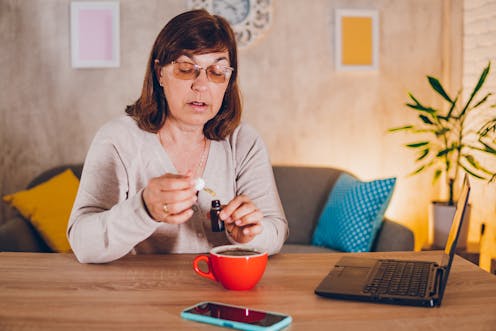
Medicinal cannabis use has increased rapidly in recent years in Australia. Since access pathways were expanded in 2016, more than 700,000 prescription approvals have been issued.
The vast majority of medicinal cannabis products on the market have not been registered on the Australian Register of Therapeutic Goods. But medical practitioners can apply to the Therapeutic Goods Administration (TGA) for approval to prescribe them to patients.
Data shows the three most common conditions for which scripts are approved are chronic pain, anxiety and sleep disorders.
Although many patients report benefits, professional bodies and regulators have raised concerns about whether prescribing is outpacing the evidence.
So what does the evidence actually say? Does medicinal cannabis work for the conditions for which it’s most commonly prescribed?
Medicinal cannabis for pain
Medicinal cannabis refers to cannabis products that are legally prescribed to treat a medical condition. This can be the plant itself, or natural compounds extracted from the plant. Some compounds similar to or the same as those found in cannabis (for example, dronabinol and nabilone) are made in a lab.
Two of the most common compounds in the plant are THC (tetrahydrocannabinol) and CBD (cannabidiol), known as cannabinoids.
These are commonly found at various concentrations in medicinal cannabis products which come in forms including oils, capsules, dried flower (used in a vaporiser), sprays and gummies.
Chronic pain is the most common reason for medicinal cannabis use. But as we’ve written in a previous article, research shows only modest benefits, with limited improvements in pain and physical functioning.
The TGA says there’s limited evidence medicinal cannabis provides clinically significant pain relief for many conditions, and should only be tried if other standard therapies haven’t helped.
Does medicinal cannabis work for anxiety?
Beside chronic pain, a growing number of people are now turning to medicinal cannabis for anxiety.
Multiple reviews have examined whether it works for this purpose and have come to similar conclusions. For THC-based products the evidence is mixed, with some patients finding relief, while others report their symptoms are worse.
There is emerging evidence for CBD, however it’s too soon to recommend medical cannabis as a first-line treatment for anxiety. So far, studies of CBD in anxiety have been small, only measured effects under experimental conditions designed to induce stress, had no comparison group, or only tested a one-off dose. Because of these limitations, the studies can’t tell us if CBD is effective for ongoing anxiety management.
A recent review found CBD had positive effects on anxiety, but these effects were seen in studies deemed to have problems with their methods, and not in studies that were more rigorously designed and conducted.
Similarly, a small Australian study (with no control group) demonstrated positive effects of CBD in young people with anxiety who had already tried other treatments. However, the authors stated more rigorous trials were still needed.
What’s more, there are recent case reports of acute psychosis arising from medicinal cannabis use. Taken together with the ambiguous evidence, the role for cannabinoids for anxiety remains far from clear.
How about sleep disorders?
The evidence for cannabis in the treatment of sleep disorders and insomnia is perhaps even more limited, with neither CBD or THC having shown clear benefits reducing the number of awakenings or time spent awake during the night, or improved sleep quality. That said, some people do report they have fewer symptoms of insomnia when using medicinal cannabis.
Similar to anxiety, many of the studies have major weaknesses in their study design which make it difficult to draw strong conclusions. There are also few studies that compare medicinal cannabis to proven treatments for sleep disorders and insomnia. This makes it hard to make recommendations for treatment based on the current research evidence.
THC can make you drowsy, and in the short term, may help people fall asleep, or feel like they’re getting more sleep. But there are some important downsides to consider, too.
For example, if you take medicinal cannabis regularly to fall asleep your body can get used to it, making it harder to fall asleep without it. In the long term, medicinal cannabis can also affect the amounts of light and deep sleep a person will have, which can result in poorer sleep quality.
Read more: Cannabinoid products may reduce total sleep time in adults with insomnia: new study
There is good evidence for some conditions
Some of the strongest evidence for medicinal cannabis products are for rare forms of epilepsy that don’t respond to existing treatments, and for treating symptoms associated with multiple sclerosis.
The only TGA-approved medicinal cannabis products are for these conditions.
There’s also evidence medicinal cannabis can help with chemotherapy-induced nausea and vomiting. Though as newer medications with fewer side effects are now available, medicinal cannabis products are not considered first-line treatments.
Risks and side effects
Common side effects with THC in the short term include drowsiness, anxiety, dry mouth, nausea, vomiting and appetite changes. For some people, these effects reduce over time.
Some people with preexisting health conditions such as schizophrenia, psychosis or heart conditions may be more prone to experiencing side effects.
An estimated one in four people using medical cannabis meet the criteria for dependence (known as cannabis use disorder). In the longer term, dependence appears more common with medical use, particularly when combined with non-medical use.
If you are suffering with anxiety, sleep problems or chronic pain, and are wondering what treatments might be most effective for you, speak to your regular GP.
Authors: Suzanne Nielsen, Professor and Deputy Director, Monash Addiction Research Centre, Monash University

 Hashtag.net.au
