

What makes a great sports coach? We identified 17 of the world’s best, and found some patterns
- Written by Cliff Mallett, Professor of Sport Psychology and Coaching, The University of Queensland
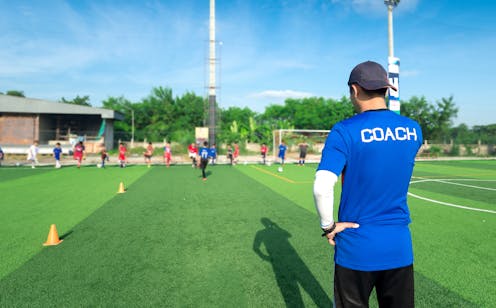
The study of leadership in high-performance coaching aims to deepen the understanding of how and why coaches lead the way they do, rather than just what they do.
There has been increasing academic and applied interest in this area, particularly due to the significant impact coaches have on athlete and team performance, as well as the ethical concerns arising from sporting cultures striving for performance excellence sometimes at the expense of athletes’ mental health and wellbeing.
This evolving landscape prompted us to research what quality coaching is and what we can learn to inform future elite coach development across the world.
Serial winning coaches
There is something special about coaches who are perennially successful in different settings, and our research investigated serial winning coaches in sport.
We defined these coaches as “a coach who has won multiple gold medals and/or major professional league titles at the highest level over a prolonged period and in different contexts (athletes/teams)”.
These coaches (16 men, one woman) represented 11 nationalities from various sports (seven were involved with invasion games such as hockey, nine in time-based sports like running and one in a combat sport).
These coaches were considered outliers among the outliers – the absolute best of the best. Many revered and successful coaches did not meet our criteria.
We also interviewed 20 of these coaches’ successful athletes.
Collectively they produced 150+ gold medals at the Olympics and world championships as well as many professional league titles in multiple sports codes.
In this study, we wanted to move beyond coach behaviours – instead, we were keen to deepen our understanding of these coaches’ values, beliefs and identities using a comprehensive and multilayered approach.
Similarities between the best coaches
The work of high-performance coaches is messy, chaotic, complex, ambiguous and relentless.
Navigating that space requires advanced capabilities for the coach to get the best from themselves, their team and their athletes, within resource constraints.
Governing bodies’ and boards’ high expectations compound the stressors of these environments. They rarely (if ever) lower these expectations.
Successful coaches create positive environments, prioritise everyone’s needs, and adapt their leadership to achieve specific goals.
We found effective coaching requires social and emotional intelligence and an ability to respond to the dynamic nature of sports settings.
An interesting footnote is that all of the coaches we identified had at least one parent who worked in the helping professions, such as teaching or health.
Overall, the research underscores the need for a holistic, caring approach to coaching that balances high challenge and high support. Indeed, performance and personal development are not binary outcomes, but interdependent.
The coaches’ approach to leadership was characterised by “caring determination” – the relentless pursuit of excellence balanced with genuine and compassionate desire to support athletes and themselves.
This duality is highlighted through various quotes from coaches and athletes, illustrating the dance between demanding high performance and providing commensurate support and care. One coach told us:
I’m crazy about winning. I’m not a bad loser, I’m not a bad sport but I love to win […] it might even be part egomania but I love being great.
These coaches were passionate about “getting ahead and staying ahead” and excited by the thrill of competition.
Nevertheless, they continually shifted between reasonable self-doubt and grounded self-belief, which drove their quest for learning to be the best.
In some cases, their patriotism for their country was a deep driver of their passion for success. One coach told us: “I am at the service of my country”.
Interestingly, many of these coaches suffered difficult life events (such as car accidents or being overlooked to compete in the Olympics) that in some cases left them unfulfilled and seeking atonement. One said: “I am simply a failed athlete […] trying to make amends.”
His athlete said: “I think in his own mind he still has something to prove.”
Finding the right balance
Crucially, this obsessive pursuit of excellence did not come at the expense of athlete health and wellbeing.
As one coach said, which was verified by his athlete:
I feel that I have a role in the life of the athletes […] I think that is perhaps a better role than the role of winning another gold medal.
This caring approach is genuine for these coaches. Another told us:
Treat people right. Be a person of integrity. You’re allowed to be demanding but you’ve got to be supportive and you’ve got to put them in a culture that explains why, and that allows them to grow mentally and physically.
When you consider all of these coaches had at least one of their parents in the helping profession, it is likely they experienced first-hand care in childhood and understood the power of forming healthy and productive relationships.
Experiencing care through a critical stage of life likely fosters a sense of caring for others, because you know how helpful that care is both to you as a person and athlete.
Importantly, we found this high-quality care and support was mutual.
Mutual care between the the coach and athlete (and indeed coach-athlete-support team) creates a “greenhouse” environment that fosters thriving for everyone, as athlete and teams pursue performance success without compromising mental health and wellbeing. Indeed, they foster health and wellbeing.
Mutual care and trust are foundational to pursuing excellence in healthy ways.
Who wouldn’t want to be part of that environment?
Authors: Cliff Mallett, Professor of Sport Psychology and Coaching, The University of Queensland


 Hashtag.net.au
